
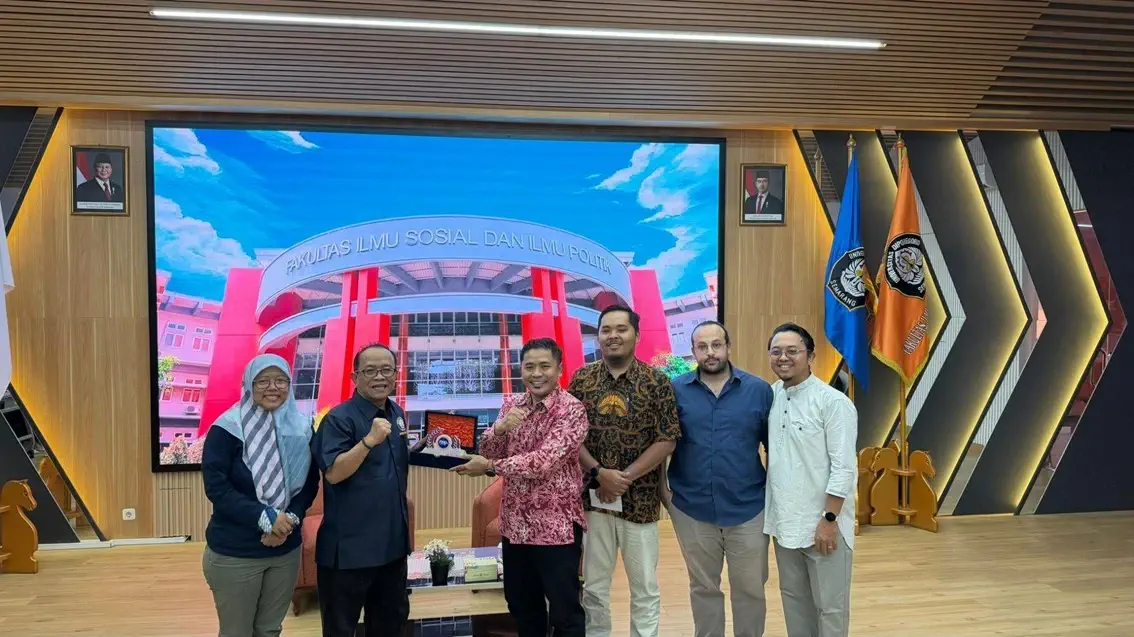

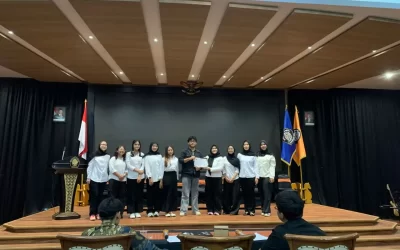
Semarang, May 8, 2026 — The Department of Politics and Government, Faculty of Social and Political Sciences (FISIP), Universitas Diponegoro, held a public lecture titled “The Future of Chinese-Indonesian Politics: Assessing Integration, Human Capital, and the Influence of Global Geopolitics” at the FISIP Undip Theater Room. This event served as a platform for critical analysis to examine the position of the Chinese-Indonesian community within the nation’s social, economic, and political structures, while exploring the concept of diaspora through a socio-political lens. The discussion is particularly relevant given the long historical journey of the Chinese diaspora, which has been an integral part of Indonesia’s national construction for centuries through maritime trade routes.
The event was opened with remarks by the Head of the Department of Politics and Government, Dr. Nur Hidayat Sardini, S.IP., S.H., M.Si. In his speech, he emphasized that the issue of ethnicity in Indonesian politics is not merely a matter of statistics but is deeply intertwined with identity politics and the historical relationship between the state and its citizens. He highlighted the importance of managing the vast potential of human resources within the Chinese-Indonesian community in an inclusive manner to mitigate socio-political tensions. He asserted that universities bear the responsibility of developing evidence-based perspectives on citizenship to ensure that diversity is integrated as a national strength.
The main session, moderated by Yoga Putra Prameswari, S.I.P., M.A., featured Munawir Aziz, M.A., M.PP, Expert Staff for Ecosystems at the Ministry of Higher Education, Science, and Technology, as the keynote speaker. In his presentation, Munawir Aziz highlighted the transformation of Chinese-Indonesian political participation following the 1998 Reformation, which has become more open despite lingering shadows of historical discrimination. He noted that the political future of this community is shaped not only by domestic dynamics but is also significantly intersected by global geopolitical dimensions.
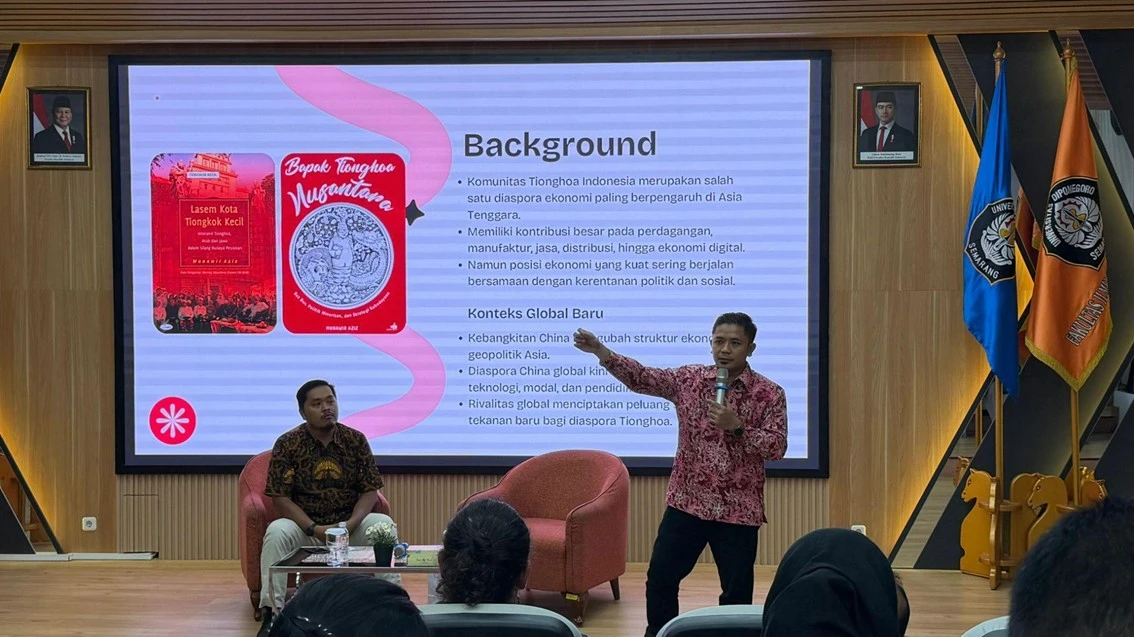
Furthermore, Munawir analyzed how the rise of China as a global economic and political power influences perceptions of the Chinese diaspora in Indonesia. Strategic relations between Indonesia and China in investment and trade often create a dilemma between nationalism and globalization, intersecting with issues of identity. Through this lecture, students were encouraged to examine the impact of such geopolitics on domestic ethnic political dynamics to formulate a more inclusive and civilized political direction.
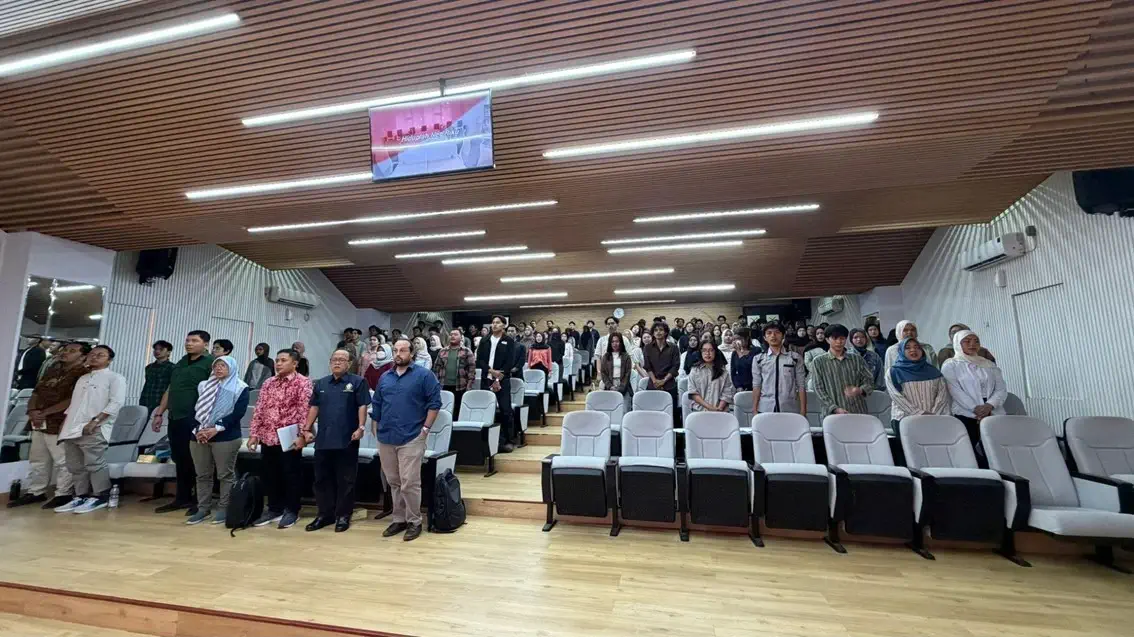
Attended by more than 100 Government Science students, the lecture reaffirmed that the integration of the Chinese-Indonesian community is a vital element in maintaining national resilience. By understanding the existing challenges and strengths, it is hoped that a collective consciousness will emerge to strengthen substantive democracy that transcends ethnic boundaries for a more solid Indonesia amidst the changing global landscape.

0 Comments